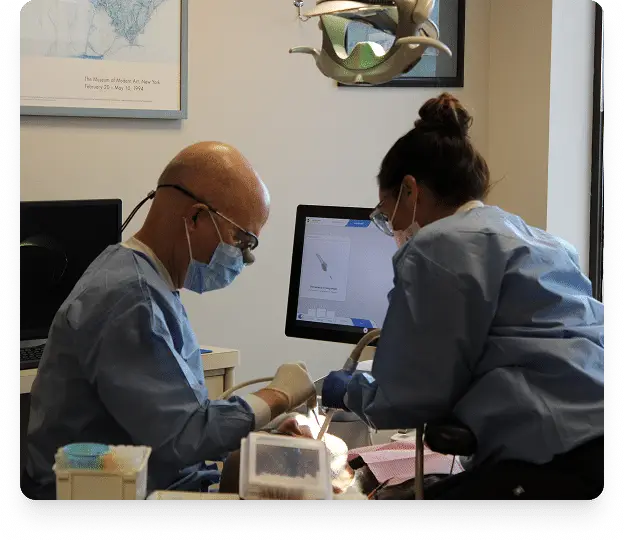
IV Sedation Dentistry: How It Works, Who It’s For, and What to Expect

IV Sedation Dentistry: How It Works, Who It’s For, and What to Expect

Roughly 36% of American adults experience dental anxiety. About 12% have fear severe enough to avoid the dentist entirely. That avoidance doesn’t make the problem smaller. It makes it bigger.

If you’ve been putting off dental work because the thought of sitting in a chair makes your chest tight, you’re not alone. And you’re not out of options. IV sedation dentistry exists specifically for situations like yours, where willpower alone isn’t enough to get you through the door.

This guide covers how IV sedation actually works, who it’s designed for, what the safety protocols look like, and what you’ll experience before, during, and after your appointment. No vague reassurances. Just the clinical picture, laid out clearly.

In this article:
– What IV sedation is (and isn’t)
– How it compares to oral sedation and nitrous oxide
– Who qualifies and who doesn’t
– Step-by-step walkthrough of an IV sedation appointment
– Safety, monitoring, and provider credentials
– Cost and insurance considerations

What Is IV Sedation Dentistry?

IV sedation dentistry delivers anti-anxiety and sedative medications directly into your bloodstream through a small catheter. It’s usually placed in your hand or arm. The “IV” stands for intravenous. Because the medication bypasses your digestive system, it takes effect within one to five minutes.

The most common medications are midazolam (a benzodiazepine) and fentanyl (a short-acting opioid for pain management). Some providers also use propofol for deeper sedation. Your dentist controls the dosage in real time, adjusting it based on how you respond.

You’ve probably heard the term “twilight sleep” (sometimes called sleep dentistry). That’s the colloquial name for the state IV sedation creates. You’re not unconscious. You’re in a deeply relaxed, semi-aware state where you can still respond to verbal cues.

Most patients report feeling like they blinked and the procedure was over. The amnesia effect is real. You likely won’t remember most of what happened, even though you were technically responsive the entire time.

That’s the key distinction. IV sedation is not general anesthesia. You breathe on your own. You don’t need a ventilator. But you also don’t feel anxiety, discomfort, or the passage of time.

The Four Levels of Dental Sedation

Not all sedation is the same. The American Dental Association recognizes four distinct levels:

Level Method Awareness Breathing Recovery
Minimal Nitrous oxide (“laughing gas”) Fully aware, relaxed Normal Minutes
Moderate (oral) Pill (triazolam/diazepam) Drowsy, may slur words Normal 2-4 hours
Moderate-to-deep (IV) IV medications Deeply relaxed, responsive to stimuli Normal 1-2 hours
General anesthesia IV + inhaled agents Unconscious May need support 4-6 hours

Most dental procedures that call for IV sedation dentistry fall into the moderate-to-deep range. It gives your dentist precise control without the risks and recovery time of full general anesthesia.

Consider Linda, a 52-year-old in Denver who needed four dental implants. She’d been avoiding treatment for three years. Not because of the cost. Because a childhood experience left her unable to sit through even a cleaning without panic. Her dentist recommended IV sedation. Linda arrived at 8 a.m., the IV was placed, and by 8:05 she was calm. Two hours later, all four implant posts were placed. Linda’s first memory after the IV? Sitting in the recovery area, drinking water. Three years of avoidance resolved in a single morning.

Considering sedation for an upcoming procedure? Contact DeWitt Dental Associates to discuss which level is right for your situation.

IV Sedation vs. Oral Sedation vs. Nitrous Oxide

This is the question most patients actually want answered. Here’s how the three most common sedation options compare:

Factor Nitrous Oxide Oral Sedation IV Sedation
Onset 3-5 minutes 30-60 minutes 1-5 minutes
Depth control Limited None (fixed dose) Precise, real-time
Amnesia effect Rare Moderate Strong
Recovery Drive yourself home Need a driver, 4-6 hrs Need a driver, 1-2 hrs
Best for Mild anxiety, short procedures Moderate anxiety Severe anxiety, long or complex procedures
Cost range $50-$150 $150-$500 $250-$900

When weighing IV sedation vs oral sedation, the biggest difference is control. With oral sedation, your dentist gives you a pill and hopes the dose is right. With IV sedation, the medication is titrated in real time. Need more? It’s delivered in seconds. Need less? The flow is adjusted immediately. That precision matters, especially during longer procedures.

Nitrous oxide is excellent for mild nerves and quick appointments. It wears off in minutes. You can drive yourself home. But it doesn’t provide the depth needed for patients with true dental phobia or procedures lasting more than an hour.

Who Is a Good Candidate for IV Sedation?

IV sedation isn’t for everyone. It’s also not just for people who are “scared of the dentist.” Here’s who genuinely benefits:

  • Patients with severe dental anxiety or phobia. Sedation dentistry for anxiety exists because past experiences can make standard dental care impossible. IV sedation breaks the cycle.
  • Patients with a strong gag reflex. A hyperactive gag reflex makes many procedures physically difficult. Sedation suppresses it.
  • Patients facing complex or lengthy procedures. Dental implants, full-mouth rehabilitations, multiple extractions, and same-day crown preparations can take two to four hours. IV sedation makes that manageable.
  • Patients with special healthcare needs. Certain cognitive or physical conditions make it difficult to sit still for extended periods. Sedation ensures both patient comfort and clinical precision.
  • Patients who want to consolidate treatment. Instead of six separate appointments, IV sedation can allow your dentist to complete multiple procedures in a single visit.

Who Should Not Receive IV Sedation?

Your dentist will review your full medical history before recommending IV sedation. Certain conditions may require modification or an alternative approach:

  • Pregnancy
  • Severe respiratory conditions (uncontrolled COPD, sleep apnea without CPAP)
  • Allergy to benzodiazepines or related medications
  • Certain cardiac conditions
  • Patients on specific medications that interact with sedatives

This is not a complete list. The medical review before your appointment exists for exactly this reason.

What to Expect During an IV Sedation Appointment

So how does IV sedation work at the dentist? Uncertainty drives anxiety, and knowing the process step by step takes some of that away.

Before Your Appointment

  • Fasting. No food for 6-8 hours before your procedure. Clear liquids may be allowed up to 2 hours before. Your office will give you specific instructions.
  • Medications. Your dentist will review your current medications and tell you which to take or skip on the day of treatment.
  • Transportation. You cannot drive yourself. Arrange for a responsible adult to bring you and take you home.
  • Clothing. Wear a short-sleeved shirt and comfortable clothing. Skip contact lenses.

During Your Appointment

The process is straightforward:

  1. Your vitals are taken: blood pressure, heart rate, oxygen saturation.
  2. Monitoring equipment is placed: pulse oximeter on your finger, blood pressure cuff, and in many cases a capnography sensor to track your breathing.
  3. A small IV catheter is placed, usually in your hand or forearm. This takes about 15 seconds.
  4. The sedative medication is administered. Within one to five minutes, you’ll feel deeply relaxed.
  5. Your dentist begins the procedure. Throughout, a trained team member monitors your vitals continuously.
  6. The medication is adjusted as needed. You remain breathing on your own the entire time.

Think about David, a 38-year-old who hadn’t seen a dentist in nine years. He needed two extractions, three fillings, and a crown. In a traditional setting, that’s four or five separate appointments spread over months. Under IV sedation at DeWitt Dental, the entire treatment plan was completed in one three-hour visit. David took the next day off work. By the following Monday, he was back to normal, with a decade of neglected dental work behind him.

After Your Appointment

  • You’ll rest in a recovery area for 15-30 minutes while the sedation wears off.
  • You’ll feel groggy. That’s normal. The amnesia effect means you probably won’t remember the procedure itself.
  • Your driver takes you home. No driving, operating machinery, or signing legal documents for 24 hours.
  • Eat soft foods. Stay hydrated. Follow your post-procedure instructions.
  • Most patients feel completely normal by the next morning.

Is IV Sedation Safe?

Yes. When administered by a properly trained and credentialed provider, IV sedation dentistry has an excellent safety profile. But “properly trained and credentialed” is the part that matters.

Here’s what to look for:

Monitoring standards. During IV sedation, your vital signs are tracked continuously. This includes:
– Pulse oximetry (blood oxygen levels)
– Blood pressure monitoring
– Capnography (CO2 monitoring to track breathing patterns)
– ECG in some cases (heart rhythm)

Provider credentials. In Colorado, any IV sedation dentist must hold a specific sedation permit from the state dental board. This requires advanced training beyond dental school: pharmacology, airway management, and emergency protocols. Look for providers with ACLS (Advanced Cardiovascular Life Support) certification and training through organizations like DOCS Education.

Emergency protocols. A properly equipped sedation practice keeps reversal agents (flumazenil for benzodiazepines, naloxone for opioids), supplemental oxygen, and airway management equipment in every operatory. The team rehearses emergency scenarios regularly.

The question isn’t whether IV sedation is safe in general. It’s whether the specific practice administering it has the training, equipment, and protocols to do it safely. At DeWitt Dental Associates in Denver, sedation is a core part of our practice, not an add-on.

Procedures Commonly Performed Under IV Sedation

IV sedation isn’t reserved for a single type of procedure. It’s used whenever the clinical situation or the patient’s needs call for it:

  • Dental implants and All-on-4 full-arch restorations. These procedures involve surgical placement of titanium posts into the jawbone. They’re precise, and they take time. IV sedation keeps you comfortable through the entire process.
  • Wisdom teeth and surgical extractions. Especially impacted wisdom teeth that require bone removal.
  • Full-mouth rehabilitation. Patients who need extensive restorative work across multiple teeth in a single session.
  • Root canals for phobic patients. The procedure itself is routine. But for patients with severe anxiety, sedation makes it possible.
  • Emergency dental procedures. When a dental emergency requires immediate surgical intervention and the patient is already in distress.

Cost and Insurance Considerations

IV sedation dentistry typically costs between $250 and $900 per appointment, depending on the length of the procedure and the medications used. This is separate from the cost of the dental procedure itself.

Dental insurance varies. Some plans cover sedation for surgical procedures like extractions or implant placement. Others don’t cover it at all. A few cover it only when a documented medical condition (like severe anxiety disorder) is on file.

Medical insurance occasionally covers sedation when there’s a medical necessity, such as a diagnosed phobia or a condition that prevents standard treatment. It’s worth checking with both your dental and medical carriers.

The cost calculation most patients overlook: IV sedation often allows multiple procedures in a single visit. When you factor in fewer appointments, fewer days off work, and less overall chair time, the per-visit sedation fee can actually reduce total treatment cost.

Your dental office should provide a clear cost estimate before your appointment. Ask. Don’t guess.

How to Prepare for Your IV Sedation Appointment

Use this checklist in the days before your visit:

  • [ ] Confirm your fasting instructions (typically no food 6-8 hours prior)
  • [ ] Arrange a responsible adult to drive you to and from your appointment
  • [ ] Provide your full medication list to your dental office
  • [ ] Disclose any health changes since your last visit
  • [ ] Wear comfortable, loose-fitting clothing with short sleeves
  • [ ] Remove contact lenses before your appointment
  • [ ] Plan to take the rest of the day off (no work, no driving, no major decisions)
  • [ ] Stock your home with soft foods and water for recovery
  • [ ] Confirm someone will stay with you for a few hours after you get home

Frequently Asked Questions About IV Sedation Dentistry

Will I be completely asleep?
No. IV sedation creates a state of deep relaxation, not unconsciousness. You’ll be able to respond to your dentist’s voice. But you likely won’t remember doing so.

How long does it take to wear off?
Most patients feel alert within one to two hours after the IV is stopped. Full recovery, meaning normal cognition and coordination, usually takes the rest of the day.

Can I drive home after IV sedation?
No. You must have a driver. Colorado law and clinical safety standards both require it. Plan for a responsible adult to be with you for several hours afterward.

Is IV sedation safe for older adults?
In most cases, yes. Your dentist will review your medical history, current medications, and any cardiac or respiratory conditions. Dosages are adjusted based on age, weight, and health status.

Does insurance cover IV sedation?
It depends on your plan and the reason for sedation. Ask your dental office to submit a pre-authorization to find out before your appointment.

What if I have a needle phobia?
This is more common than people admit. The IV catheter is small, and many practices apply a topical numbing agent to the site first. Once the sedation takes effect in seconds, you won’t think about the needle again.

Rachel, a 44-year-old teacher, had avoided dental work for five years because of a needle phobia. When she finally scheduled her appointment at DeWitt Dental, the team applied a numbing cream to her hand before placing the IV. “I felt a tiny pinch,” she said. “And then I felt nothing at all.” She had two crowns placed that morning. She was back in her classroom the next day.

The Bottom Line

IV sedation dentistry is not a luxury. For millions of people, it’s the closest thing to painless dentistry, the difference between getting care and going without. It’s precise. It’s safe when administered by trained providers. And it can collapse months of avoided treatment into a single comfortable visit.

If dental anxiety has kept you from the care you need, this is worth a conversation. Not a commitment. A conversation.

Schedule a sedation consultation at DeWitt Dental Associates in Denver. We’ll review your medical history, discuss your options, and give you a clear picture of what treatment would look like, before you decide anything.

Leave a Comment

Your email address will not be published. Required fields are marked *

Scroll to Top